Restroom cleaning
In many toilets, limescale, rust stains and even yellowish and brownish residues take their place after a while. These unpleasant consequences can, however, easily be dealt with by regular cleaning.
It’s generally recommended to clean your toilet at least once a week, to keep it disinfected and prevent it from becoming a source of bacteria. Let’s take a look at the equipment you’ll need to clean your toilet:
- A sprayer (Push Push)
- A toilet brush
- Rubber gloves
- A microfiber cloth
- Wipes and/or toilet paper
- All-purpose cleaner
- Toilet bowl cleaner
- A disinfectant
- Baking soda and vinegar
1 Cleaning the bowl
To clean the toilet bowl, it’s best to use a cleaning product specially designed for this area. Bowl cleaners remove limescale residues and deodorize the toilet.
Here’s how to clean the bowl:
First, empty as much water as possible using a toilet brush. To do this, repeatedly push your brush into the inlet of the drain.
Once there’s a minimum of water left in the bowl, you can apply your bowl cleaner to the sides of the bowl. Make sure you reach all the corners with your toilet brush. If some stains or residues remain, you can use an old toothbrush to help.
Natural alternative
If you don’t have a toilet bowl cleaner to hand, don’t panic! There are several 100% natural alternatives to help you clean your toilet properly.
White vinegar is your ally when it comes to cleaning your toilet. Start with the same step: drain as much water as possible from the bowl.
Once there’s only a bottom left, you can fill the bowl with white vinegar. Note that to increase its effectiveness, you can heat the vinegar. Leave overnight.
The next day, you can conclude your work with your toilet brush.
2 Cleaning the bezel
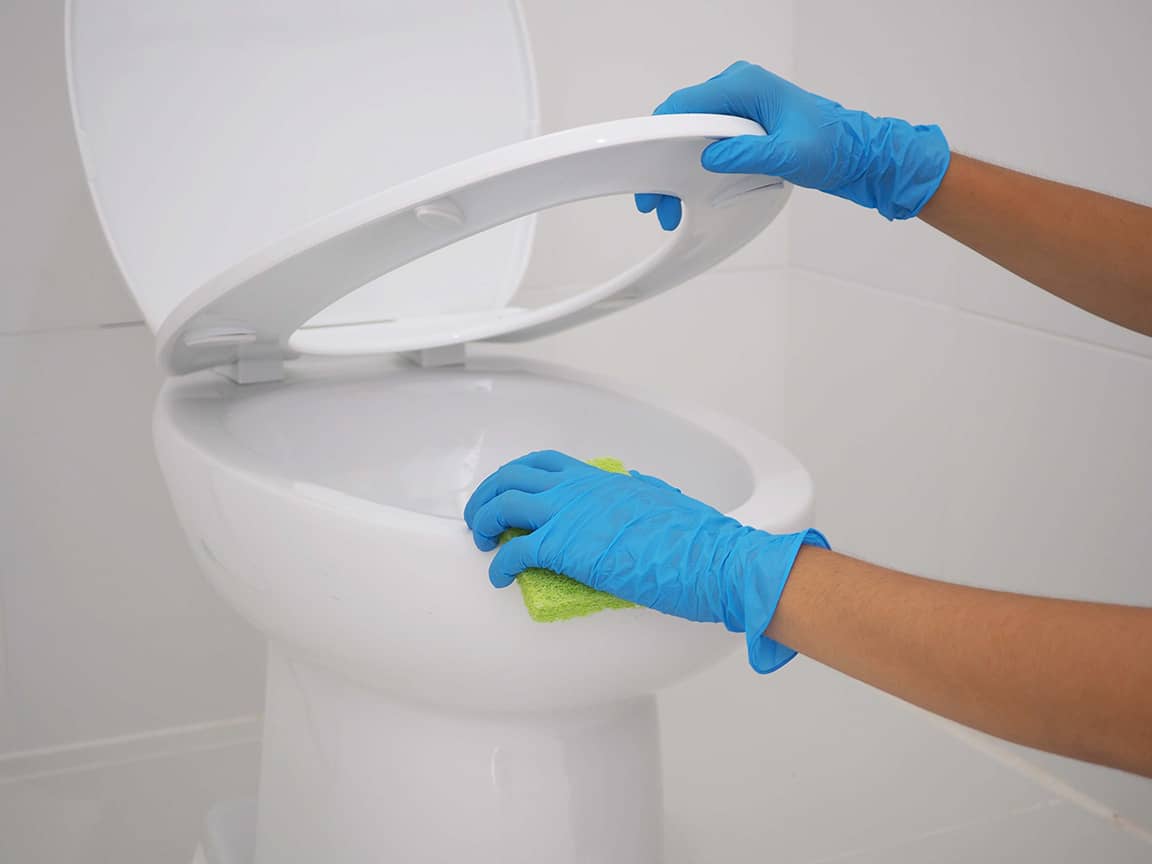
Over time, toilet glasses often tend to become dirty and yellow from urine and feces. It’s very important to clean them regularly to prevent the build-up of bacteria on a surface that comes into contact with our skin.
To begin cleaning the bezel, start by dusting it with a little toilet paper.
Once the surface has been dusted, you can now spray the bezel with an all-purpose cleaner. Leave for about five minutes to allow the chemical to penetrate the stains and dirt.
Then scrub the surface with a brush, or for hard-to-reach areas, an old toothbrush. Once all stains and dirt have been removed, you can use a microfiber cloth to smooth the surface.
Note: you can use the same process to clean the outer surface of the tank and the base of your toilet.
3 Cleaning the tank
To clean the inside of your tank, it’s important to first remove the water. To do this, turn off your water supply and flush the toilet a few times. Once there’s no more water in the tank, you can start cleaning. All you need is a sponge and disinfectant.
You can then soak your sponge in clean water and, once wrung out, spray it with the disinfectant of your choice. Once your sponge is thoroughly soaked, you can tackle the float, valve and tank walls.
If limescale and residues persist, you have the option of soaking your tank in vinegar, which will make cleaning the tank much easier. Here are the steps to follow for this option:
- Remove water from reservoir
- Add 3 to 7 gallons of white vinegar. Make sure all dirt (rust and rot) is covered with vinegar.
- Leave the vinegar to work for 12 hours
- Flush the toilet a few times to drain off the vinegar
- Use a brush or sponge to remove remaining dirt (tip: you can add a little baking soda to increase the effectiveness of your brush/sponge!).
- Reopen your water inlet
- Rinse your tank a few times
Conclusion
And that’s it, your toilet cleaning is now complete! Keep in mind that weekly cleaning is the best way to keep your toilets clean.
Before embarking on another activity, be sure to wash your hands, given the circumstances of this cleaning. If you used rubber gloves, you can wash them for next time!
If you have any questions about toilet cleaning, contact us! Put your trust in Monsieur Propreté!